
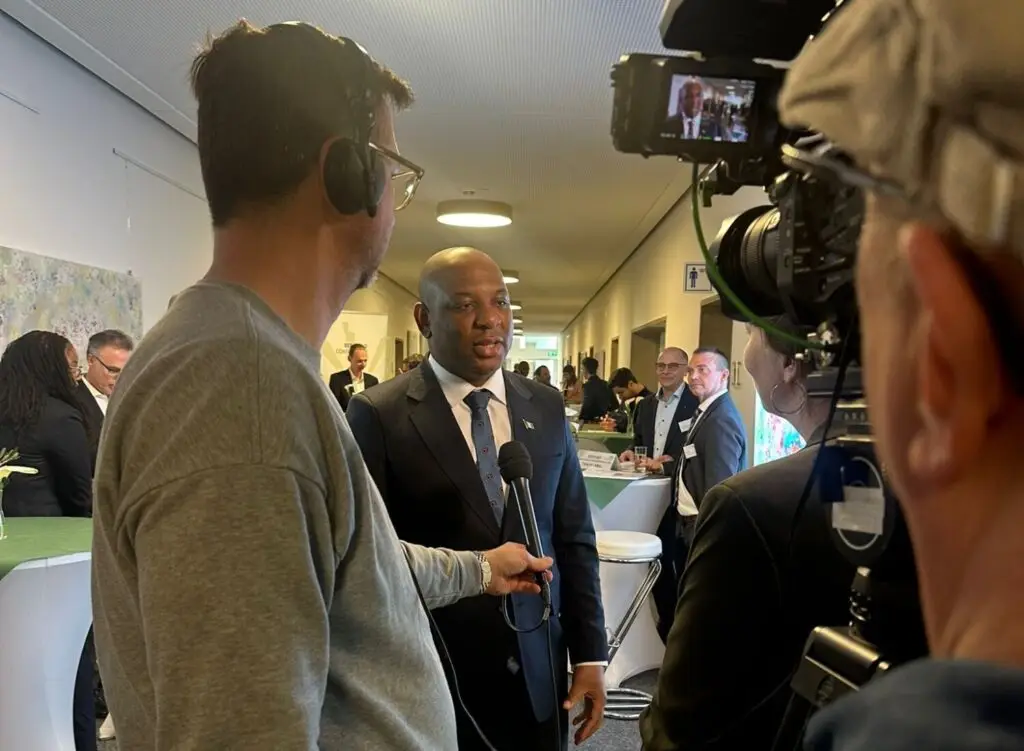
Nigeria is rewriting the rules for its steel and aluminium sector. At the German-African Economic Forum in Dortmund, the Honourable Minister of Steel Development, Prince Shuaibu Abubakar Audu, set out a clear industrial vision: raw materials must be transformed into higher-value products within the country before they leave its borders. For German companies in steel processing, automotive supply chains, or critical minerals, this is a strategic inflection point.
The question is: who is building the relationships and market intelligence today that will determine access to Nigeria’s steel value chain in five years?
Why This Matters Now
Nigeria’s Value-Addition Bill (2025/26) mandates a minimum 30% local value addition on all raw materials before export, with a 15% levy imposed on non-compliant exporters. This is not a proposal. It is active policy. Under President Tinubu, Nigeria has established a dedicated Ministry of Steel Development. That may sound bureaucratic, but it is a political signal: Nigeria is no longer content to export raw materials. It is building an industry.
Combined with the country’s ambition to become a continental hub for hot briquetted iron (HBI) production, Nigeria is positioning itself as both a supplier and a processor of critical steelmaking inputs. For German Mittelstand companies, this creates a dual reality: significant market opportunity on one side, regulatory complexity on the other.